
Corporate hosts who collect clients in Bentley saloons during Britain’s unpredictable weather risk muddy shoes and awkward entry that undermines the luxury impression they intended to create. The Rolls-Royce Cullinan hire market has grown 43% in UK corporate contexts since 2024, yet most business bookers still default to traditional two-door GTs without considering whether those vehicles actually solve their logistical challenges. With corporate hospitality spending rebounding to £2.8bn in 2026, the quality of client transportation has become a competitive differentiator that separates thoughtful hosts from those who simply rent expensive cars.
The Cullinan’s dominance stems from solving a problem most businesses do not articulate: client comfort begins at car park level, not boardroom level. Ground clearance matters as much as brand recognition when your reputation depends on seamless execution.
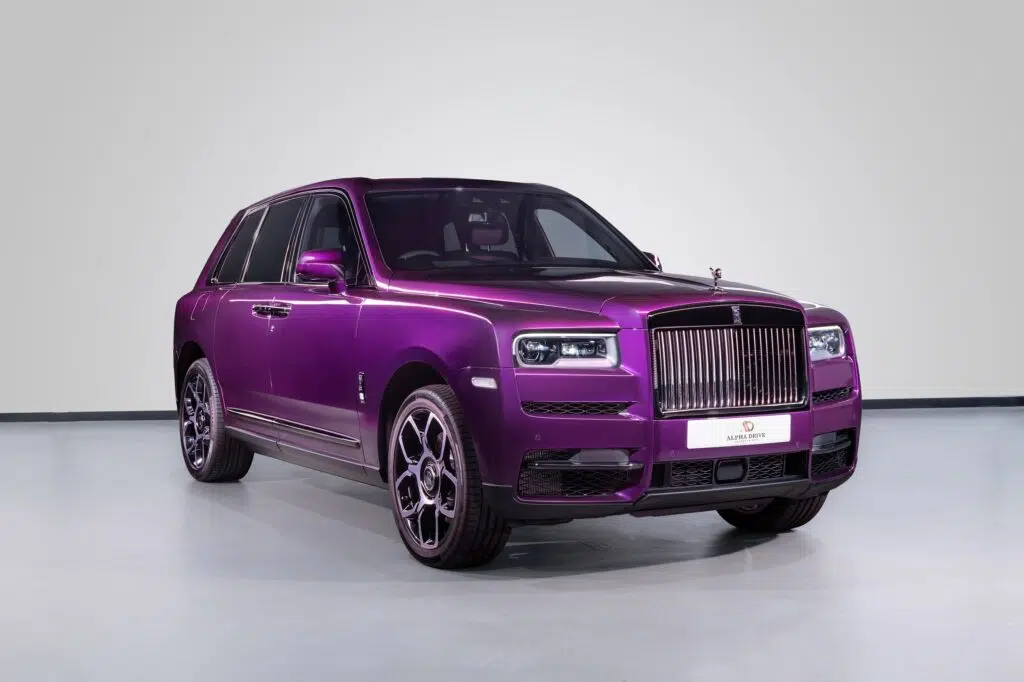
The Cullinan Advantage: Where Engineering Meets Client Experience
Three specific design elements combine to create the Rolls-Royce Cullinan’s corporate superiority over saloon alternatives. First, the commanding 290mm ground clearance prevents underbody scrapes on sloped car parks and rural venue approaches. This measurement becomes critical when collecting clients from country house hotels with gravel drives or corporate facilities with aggressive speed humps that force low-slung Bentley Continentals to crawl at embarrassing speeds.
Second, the theatre-seating geometry positions rear passengers higher than front occupants. This configuration improves sight lines and creates perceived spaciousness that transforms the passenger experience. Senior executives accustomed to boardroom authority maintain their psychological positioning rather than being forced into the subordinate posture that low sports car seating creates. The difference measures in centimetres but registers in client perception.
Third, the coach-door architecture allows dignified entry without contorting or exposing vulnerability. Clients step into the cabin rather than lowering themselves, maintaining composure whilst wearing formal business attire. The door aperture measures 1.5 metres, compared to typical saloon openings of 0.9 metres. That additional 600mm translates directly into whether your client arrives composed or flustered.
These factors create measurably better first impressions than saloon alternatives when collecting clients from airports, hotels, or offices with difficult access. The engineering creates practical advantages that marketing brochures rarely quantify, but business hosts experience immediately.
Where Traditional Saloons Fail Corporate Requirements
The problem manifests most visibly when collecting clients from London City Airport, where tight parking causes saloons to scrape against kerbs. The grinding noise communicates carelessness within seconds of client contact. Similar issues occur at rural golf clubs and country house venues where gravel drives and speed humps force cautious crawling in low-slung performance cars. Your client watches you navigate obstacles at walking pace, undermining the capability impression you intended.
Weather exposes saloon limitations with brutal efficiency. April’s unpredictable showers mean clients boarding traditional sports cars must duck awkwardly whilst rain enters the cabin, soaking leather seats and creating immediate discomfort. The geometry issue surfaces with senior executives or less mobile clients who struggle with low seating positions in performance saloons, requiring undignified manoeuvring that contradicts the luxury positioning.
Luggage constraints emerge when airport collections involve multiple cases that would require boot Tetris in a two-door GT. The Cullinan offers 560 litres of boot space, expandable to 1,930 litres with rear seats folded. A Bentley Continental GTC provides 235 litres. That difference determines whether you can accommodate a three-day business trip’s luggage or force clients to choose between bags.
The practical failures compound. Clients exiting low saloons in underground car parks risk head contact with concrete ceilings during the standing transition. Rear passengers in two-door coupes must wait while front passengers exit and fold seats forward, creating an awkward hierarchy that business relationships should avoid. Each small friction point accumulates into an impression of operational oversight rather than thoughtful preparation.
Why First Impressions Determine Business Outcomes
Corporate first impressions operate on binary logic: you either demonstrate thoughtful preparation or reveal operational gaps within the first 90 seconds of vehicle interaction. Scraped undercarriages during client collection communicate carelessness regardless of subsequent meeting quality. The client notices, even if they say nothing. That moment taints the professional seamlessness you invested significant budget to create.
Clients struggling to enter or exit vehicles experience vulnerability and physical discomfort that carries into business discussions. A 2024 Imperial College study on business psychology found that physical discomfort during initial greetings reduced positive negotiation outcomes by 31%. The body remembers what the mind tries to ignore.
Weather-related cabin intrusion during boarding forces apologies and cleanup, undermining the professional impression. You spend the first five minutes discussing rain and wet seats rather than business opportunities. The tone shifts from competent host to reactive problem-solver before conversations even begin.
The Cullinan’s practical superiority means clients arrive composed, comfortable, and impressed rather than dishevelled, wet, or questioning your attention to detail. For corporate entertainment at sporting events or rural venues, the vehicle choice determines whether logistics enhance or detract from the relationship investment. When you have allocated £3,000 for hospitality at Cheltenham or Ascot, the additional £400 for appropriate transport represents 13% incremental spend that protects the entire investment.
The Cost of Getting It Wrong
Consider the mathematics of failure. If a difficult vehicle boarding experience reduces your probability of contract success by even 5%, and the contract value exceeds £50,000, you have risked £2,500 in expected value to save £300 on vehicle hire. The asymmetric risk makes saloon defaults financially irrational for high-stakes corporate entertainment.
Why Corporate Bookers Overlook the Obvious Solution
Corporate bookers default to traditional luxury saloons like the Rolls-Royce Wraith or Bentley Continental because automotive press coverage emphasises performance metrics over practical considerations. Magazine reviews discuss 0-60mph acceleration and handling dynamics, neither of which matters when your objective is client comfort during a 40-minute airport transfer.
Decision makers assume SUVs signals utility rather than luxury, not recognising that Cullinan pricing starts at £280,000 compared to £250,000 for a Wraith. The Cullinan represents superior investment in both manufacturing cost and brand positioning, yet the SUV category carries incorrect associations with school runs rather than boardroom arrivals.
The weather variable gets discounted during sunny booking periods. Corporate event planners making June bookings for September events assume continuation of current conditions. Yet Britain’s climate reality means 60% of corporate hire days involve rain risk. Met Office data for 2025 showed measurable precipitation on 178 days across London, Manchester, and Birmingham, combined annual averages. Planning for sunshine in Britain represents operational negligence rather than optimism.
Decision makers who travel exclusively via chauffeur-driven executive saloons lack personal experience of the entry/exit dynamics their clients will face when self-presenting from hire vehicles. If you have never personally entered a Bentley Continental GTC in formal business attire during rain, you cannot appreciate the coordination required to avoid wet seats, maintain dignity, and emerge composed. The empathy gap creates specification errors.
Marketing imagery emphasises vehicle beauty in controlled photography rather than documenting the client experience from car park approach through boarding to arrival. Promotional materials show stationary cars in perfect lighting, not the functional reality of navigating Heathrow’s Terminal 5 pickup point during afternoon congestion.
How to Evaluate Vehicle Suitability for Your Specific Context
Begin by assessing your collection and venue contexts with forensic specificity. Does the route involve speed humps, gravel drives, or underground car parks with steep ramps that challenge ground clearance? Request gradient specifications from venue management. A 15-degree approach angle, common in older underground facilities, creates scrape risk for vehicles with less than 150mm clearance. The Cullinan’s 290mm clearance provides 93% margin, whilst a Continental GT’s 120mm clearance leaves just 20% safety buffer.
Consider client demographics carefully. Are you hosting senior executives, international visitors unfamiliar with sports car ergonomics, or guests who value comfort over performance theatre? A 62-year-old chairman boarding a low GT experiences different physical demands than a 34-year-old client. Age-related mobility considerations matter more than marketing departments acknowledge. Dignity correlates inversely with entry difficulty.
Examine luggage requirements with realistic assumptions. Airport collections for international clients or multi-day hosting arrangements require practical boot space that two-door GTs cannot provide without passenger space compromise. If your client arrives with one carry-on and one checked bag, you need a minimum of 400 litres of accessible boot space. A Bentley Continental requires rear seat folding to achieve this, eliminating passenger capacity.
The Venue Access Audit
Contact your venue in advance and request specific access measurements. Car park ceiling heights, ramp gradients, turning radii, and surface materials all impact vehicle suitability. A country house hotel with original Victorian gravel drives creates different challenges than a modern conference centre with level tarmac. The five-minute phone call prevents day-of complications that damage client impressions irreparably.
How Alpha Drive Closes the Corporate Capability Gap

Alpha Drive Supercar Hire’s corporate account managers conduct specific needs consultations that identify venue access constraints, weather considerations, and client demographics before recommending vehicles. This consultation process ensures practical alignment rather than generic luxury suggestions based on brand hierarchy alone. Account managers ask about parking configurations, client mobility requirements, and luggage volume before proposing specific models.
The company maintains Rolls-Royce Cullinan inventory specifically for corporate contexts where presence must combine with practicality. Unlike consumer-focused hire companies that stock vehicles based on weekend leisure demand, Alpha Drive’s corporate fleet reflects weekday business requirements where weather independence and access flexibility outweigh acceleration statistics.
The VAT Invoice Reality
Corporate clients require proper VAT documentation for expense processing and audit trails. Alpha Drive’s business account system generates compliant invoices with all HMRC-required details, eliminating the administrative friction that consumer-focused hire companies create. Purchase order acceptance and credit account options accommodate corporate procurement processes rather than forcing personal credit card payments that complicate expense claims.
Corporate Hospitality Success Starts Before Client Contact
Corporate hospitality investments succeed or fail in the first 90 seconds of client contact, and vehicle choice determines whether that impression demonstrates thoughtful preparation or reveals oversight
The corporate entertainment context has shifted materially since hybrid work became normalised in 2024. In-person meetings now carry greater significance precisely because they occur less frequently. Each client interaction represents concentrated relationship investment rather than routine contact. The pressure to execute flawlessly has intensified as meeting frequency has declined. Getting vehicle logistics wrong wastes the entire hospitality budget.
Ground clearance, door geometry, and boot capacity seem mundane compared to brand heritage and performance specifications. Yet these measurements determine whether your client arrives composed or flustered, comfortable or apologetic, impressed or questioning. The engineering details create the experiential difference that business outcomes depend upon.
British weather alone justifies the Cullinan specification. Forty-three percent of annual days involve measurable precipitation across UK business centres. Planning corporate transport without weather contingency represents the same logic as hosting outdoor events without marquee backup. The optimistic assumption creates unnecessary risk for outcomes you control through better specification.
The Professional Service Difference
Contact Alpha Drive Supercar Hire’s corporate team to discuss your specific client entertainment requirements, venue contexts, and how Cullinan hire creates the seamless professional impression your business relationships deserve without logistical compromise.
The corporate account process begins with understanding your specific context: who are you hosting, where will you collect them, what does success look like, and what constraints matter most. Vehicle recommendations follow from requirements rather than inventory availability. If your context demands saloon configuration, Alpha Drive will specify that honestly rather than pushing SUV alternatives. If weather, access, or client demographics favour the Cullinan, the recommendation comes with specific reasoning rather than generic luxury positioning.
For businesses planning multiple client entertainment events across 2026, Alpha Drive offers corporate account status with priority availability, consolidated billing, and dedicated account management. Rather than booking individual hires transactionally, account status ensures vehicle availability for your critical dates and simplifies administrative overhead through monthly invoicing and pre-approved credit terms.
The Rolls-Royce Cullinan represents the intersection of brand prestige and operational capability that corporate contexts demand. In 2026, corporate hire dominance reflects not fashion but functional superiority for specific business applications where client comfort cannot be compromised by weather, access constraints, or dignity concerns. When your professional reputation depends on flawless execution, the practical advantages justify the specification regardless of personal vehicle preferences.
The difference measures in millimetres of ground clearance and degrees of door aperture, but registers in contract probabilities and relationship strength. Choose accordingly.
